





































Contact
Talk to us.
A problem with a product, a spare part or a question: pick the quickest route.
- Phone
- (46) 3525-1785
- sac@mta.com.br
- Sales and retailers
- comercial@mta.com.br
- Hours
- Mon–Fri, 8:00 to 18:00
MTA customer service
Customer ServiceI have a problem with my product
Open a ticket at the MTA Customer Service Center and choose your profile:
- Consumerbought the pan in a store
- Retaileryour store buys directly from MTA
Virtual assistant
Chat with MTA.i
Get instant answers about use, care, induction, cooking times and warranty. If you need a person, it takes you to WhatsApp.
Viewing-window cooker and support
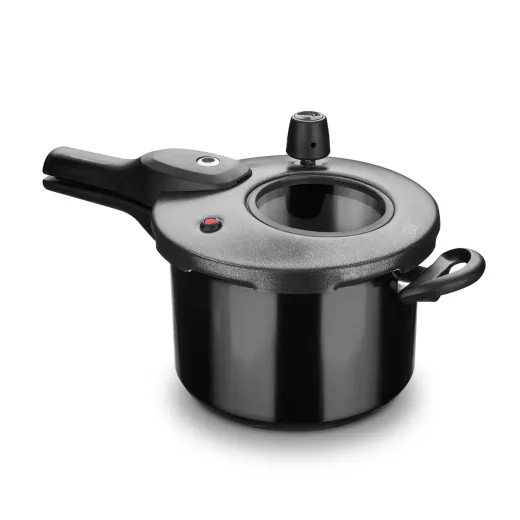
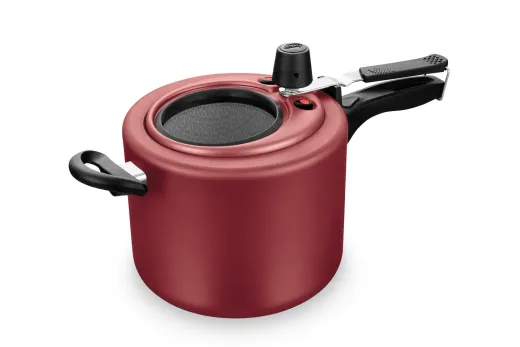
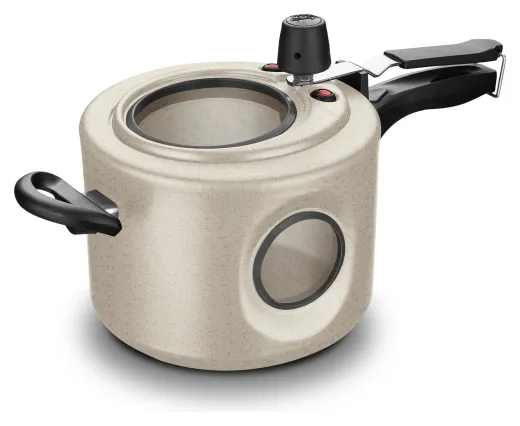
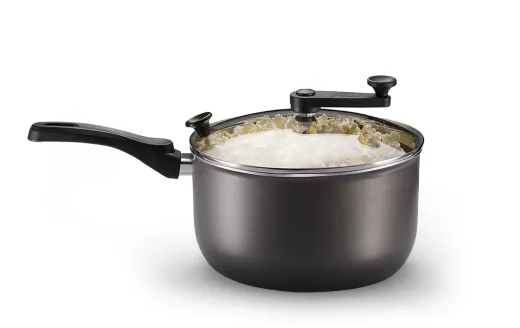
What is the pressure cooker's viewing window for?
To follow the cooking without opening the pot. You check the food and the water level with the lid closed and the pressure on, without depressurizing, opening and waiting for it to build pressure again. That saves time and gas.
Is the viewing-window pressure cooker certified?
The window is tempered glass that withstands high temperatures, and the cooker follows certification standards. MTA pressure cookers are registered with Inmetro. Always use it as directed in the product manual; if in doubt, contact customer service.
Does my pan work on an induction cooktop?
It depends on the model. On product pages, induction models list “Induction-ready base” among their features, and lines with induction models are marked in the Lines menu.
How do I know which spare part fits my pan?
Message MTA on WhatsApp or open a support ticket with your pan's model: the team will tell you which original spare part fits it.
Can I visit the Factory Store?
Yes. It's at Av. Dambros e Piva, 1105, Centro, Marmeleiro (PR), Brazil, open Monday to Friday, 8:00 to 18:00.
How do I contact MTA customer service?
Through customer service (online ticket), by phone at +55 (46) 3525-1785 or by email at sac@mta.com.br, Monday to Friday, 8:00 to 18:00.
I have a store. How do I sell MTA products?
Sign up on the Sell MTA in your store page. Our sales team will get in touch. You can also write to comercial@mta.com.br.
Materials and coatings
What's the difference between aluminum, stainless steel and ceramic-coated cookware?
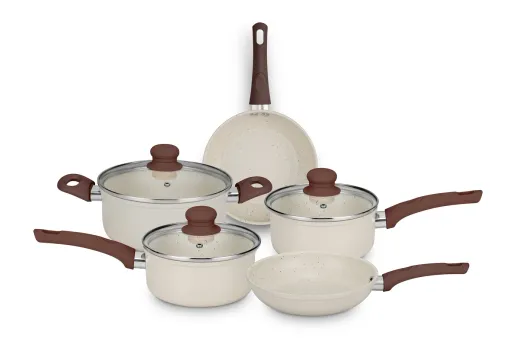
Aluminum heats fast and is light, but without a coating it can react with acidic foods and darken. Stainless steel is the most durable, doesn't react with food and can take metal utensils. A ceramic coating is a layer applied over the base (usually aluminum) that keeps food from sticking and lets you cook with less fat, but needs more care to avoid scratches.
Does food stick to stainless steel?
It can, because stainless steel has no ceramic coating. That's why MTA recommends using a little more oil and cooking over low to medium heat. A useful trick is to preheat the empty pan briefly before adding the oil and food.
What is a tri-ply base and what's the advantage?
It's a base made of layers of stainless steel and aluminum. The aluminum in the middle conducts heat and the stainless steel protects it and adds strength. The result is even heating with no hot spots, no need for high heat and lower energy use. At MTA, the pressure cookers have a tri-ply base.
Does the ceramic coating change color?
A light ceramic coating can change color with strongly pigmented sauces or if the pan is used to store food, but that doesn't affect use.
How long does the ceramic coating last?
It mostly depends on how it's used. High heat, metal utensils, abrasive sponges and thermal shock (cold water in a hot pan) are the main causes of wear. With the care described in these answers, the coating performs well for much longer.
The coating has peeled or scratched. Can I still use the pan?
Surface scratches don't stop you using it, but they reduce the non-stick performance. If the coating is flaking off, stop using the pan and contact MTA customer service for an assessment, as damaged parts should be examined by the manufacturer.
Stove and cooktop compatibility
How do I know if my pan works on an induction cooktop?
Induction only heats cookware with a ferromagnetic base. The simplest test is to hold a fridge magnet to the center of the outer base: if it sticks firmly, the pan is compatible; if it slides off, it isn't. You can also look for the induction symbol (a coil) on the bottom of the piece or on the packaging.
Does all stainless steel or ceramic-coated cookware work on induction?
No. Plain aluminum, glass and copper don't work on induction. Ceramic-coated cookware only works when the line is made with a magnetic steel disc in the base. The same line can have versions with and without an induction base, so always check compatibility on the MTA product's packaging.
What should I watch for on gas and electric stoves?
On a gas stove, the flame shouldn't go past the base of the pan, as that can stain or damage the finish and outer coating. On an electric hob, the hob's diameter should be the same as or smaller than the pan's. Centering the pan on the burner also helps spread the heat.
Can I put the pan in the oven?
It depends on the line. The limit usually comes from the handles, knobs and lids, not the pan itself: Bakelite or partly plastic handles and glass lids have a lower maximum temperature. All-stainless-steel pans with no plastic parts can usually go in the oven.
Use and care
What should I do before using my pan for the first time?
Remove the labels and wash the pan. For ceramic-coated cookware, after washing and drying, rub the inside with oil, heat over low heat for 2 to 3 minutes, let it cool and wash again with a soft sponge and mild detergent in warm water. Repeat this now and then to keep the coating in good shape.
What's the ideal cooking temperature? Do I need high heat?
No. Low to medium heat is enough, especially with tri-ply bases, which spread heat well. High heat makes food stick, stains stainless steel and wears the coating. Never leave an empty pan on the heat.
Which utensils can I use?
On ceramic-coated cookware, use only nylon, silicone, wood or bamboo utensils, never anything with metal edges. On stainless steel you can use metal utensils, taking care not to scratch the surface.
Can the pan go in the dishwasher?
Only stainless steel pans. Ceramic-coated cookware, viewing-window pressure cookers and iron pieces, including enameled ones, should be washed by hand with a soft sponge and mild detergent. Hand-washing also keeps stainless steel shinier.
How should I clean my pan day to day?
Use a soft sponge and mild detergent. On stainless steel, the rougher side of the sponge with a cream cleanser can be used on the inside and the bottom, and the soft side on the polished outer sides. Avoid steel wool and abrasive products. After washing, rinse with hot water and dry right away, since chlorine in the water can leave stains.
There are stains on my pan. How do I remove them?
Whitish stains on the inside bottom usually come from rice and pasta starch, and come off with a cloth dampened with lemon juice or vinegar, or with stainless steel polish. Bluish or rainbow-colored stains on stainless steel are caused by overheating and come off the same way. To prevent them, dissolve salt in boiling water or with the food, don't store food in the pan, and keep liquid or fat from running down the outside while cooking.
Cast iron and enameled cast iron
What's the difference between bare cast iron, enameled cast iron and carbon steel?
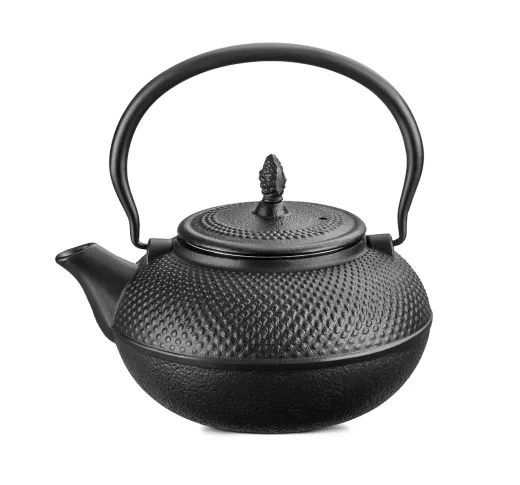
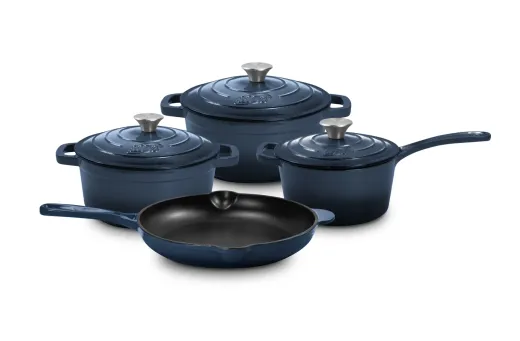
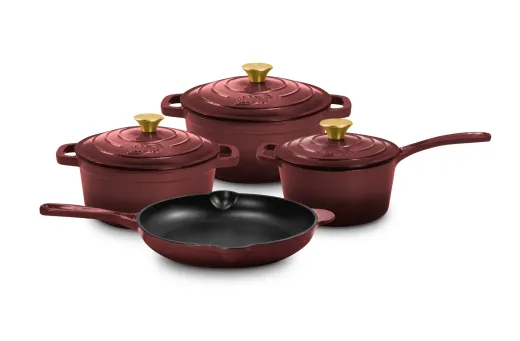
All three are sold as "iron cookware", but the care differs. Bare cast iron: a single molded piece, no enamel; the main care is seasoning, drying completely and oiling after washing. Enameled cast iron: a molded piece covered in vitreous enamel; the main care is avoiding drops and thermal shock. Carbon steel: rolled carbon steel, thinner and lighter; the main care is drying well and oiling.
Do I need to season it before first use?
For bare cast iron, yes. Wash, dry, rub the inside with oil and put it over low heat for 1 to 2 minutes. Even pre-seasoned pieces still need daily care. Enameled iron doesn't need seasoning: just hand-wash with a soft sponge and mild detergent and dry. If the inside has a ceramic coating, follow the use and care answers.
How should I wash and store cast iron cookware?
Always by hand, with a soft sponge. MTA doesn't recommend the dishwasher for iron pieces, not even enameled ones, and advises against soaking them. For bare cast iron, dry it completely (you can put it over low heat for a moment) and wipe a thin layer of oil inside and out. Store it somewhere dry; too much oil makes the surface sticky.
My cast iron pan has rust. Is it ruined?
Usually not. Rust spots can appear even with proper care and are normal on iron products. Remove the rust with a sponge, coarse salt or vinegar, then re-season the piece, since the metal is left unprotected.
The enamel chipped or cracked. What should I do?
Chips in the enamel almost always come from drops, knocks or thermal shock. If the chip is on the outside, the exposed area may rust without affecting performance; just rub a little oil on the spot with a paper towel. If the enamel or inner coating is coming off, stop using the piece and contact MTA customer service for an assessment.
Can cast iron go in the oven and on an induction cooktop?
It works on induction, since iron is magnetic, and also on gas, electric and glass-ceramic stoves. On glass cooktops, lift the piece to move it rather than dragging it, so you don't scratch the surface. In the oven, pieces without plastic parts are usually fine; versions with a ceramic inner coating have a lower maximum temperature, shown on each MTA product's packaging.
What heat is best for cast iron, and what safety precautions should I take?
Low to medium heat. Iron conducts heat more slowly than aluminum but holds much more of it, so heat it gradually and avoid high heat. Never put a hot piece in cold water: thermal shock can crack the enamel and even the iron. The pieces are heavy and the handles get hot, so use oven mitts and both hands.
Can I cook acidic foods or store food in cast iron?
On bare cast iron, long cooking with tomato, wine or vinegar wears away the seasoning and can leave a metallic taste; stick to shorter cooking and don't store food in the pan. Enameled iron handles acids better, since the enamel insulates the iron, but it shouldn't be used to store food either. Move leftovers to a suitable container.
Safety, warranty and after-sales
Is the ceramic coating bad for your health?
The ceramic coating is safe when used as directed. The main thing is not to overheat an empty pan or use high heat for long periods, since excess heat degrades the coating.
Are MTA products Inmetro certified? How can I tell?
In Brazil, metal cookware requires mandatory certification under Inmetro Ordinance No. 499/2021 and must be registered with Inmetro to be sold. Consumers can check compliance by the Inmetro Conformity Identification Seal on the packaging or on the piece itself.
What warranty does the cookware have and what does it cover?
All cookware carries the 90-day legal warranty under Brazil's Consumer Protection Code, counted from the invoice date, and MTA may add a contractual warranty on top of it. Each MTA line's warranty period is shown on the packaging and warranty certificate. The warranty covers manufacturing defects, not wear from improper use such as scratches from metal utensils, overheating or drops. The purchase invoice is required.
My product is defective. How do I get it replaced or repaired?
Contact MTA customer service with the model, the batch number (engraved on the bottom of the piece) and the invoice, plus photos of the problem. The product will be technically assessed to check whether it's a manufacturing defect. For online purchases, consumers also have a 7-day right of withdrawal from delivery, under article 49 of Brazil's Consumer Protection Code.
